
This requires that equipment surfaces be engineered to inhibit the harboring of microorganisms and contaminants, constructed from materials that will not adversely interact with the product, and capable of enduring cleaning and sanitizing protocols.
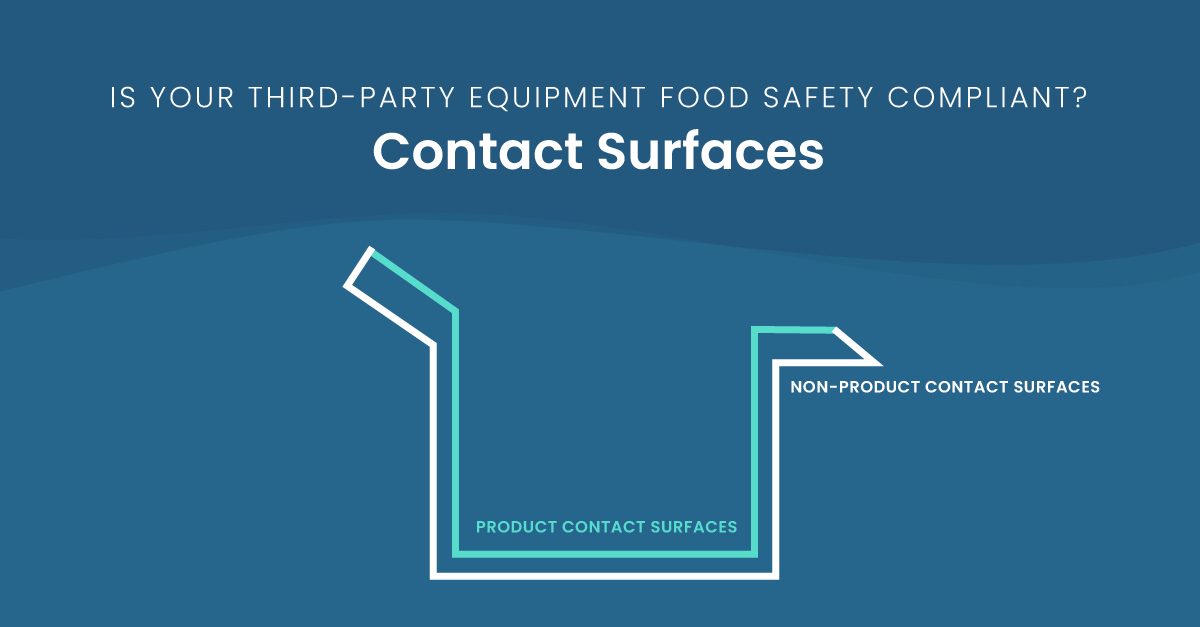
3-A Sanitary Standards Inc., a not-for-profit organization that establishes regulations for manufacturing equipment in the food and beverage sector, has identified two primary categories of contact surfaces. These include:
Product contact surfaces: All surfaces directly exposed to the product, as well as surfaces from which splashed product, liquids, or material may drain, drip, diffuse, or be drawn into the product or onto product contact surfaces.
Non-Product contact surfaces: All exposed surfaces from which splashed product, liquids, or other soil cannot drain, drip, diffuse, or be drawn into or onto the product, product contact surfaces, open packages, or the product contact surfaces of package components.
To confirm that new equipment meets food safety standards, meat processors should verify that all surfaces have been evaluated and classified as either product or non-product contact surfaces. Third-party suppliers must construct contact surfaces to precise specifications covering position, surface materials, angle, and seams, in order to safeguard the product against bacterial growth and other contaminants. If any equipment surface will come into contact with the product, the third-party supplier should furnish a materials analysis along with cleaning procedure documentation to the processor.
Discover our primal solution for protein processors, FloVision Primal.