FSQA Essentials: The Core Pillars to Address
Standards and regulatory adherence
Conform to EFSA, FDA, and local regulations to guarantee product safety and accurate labelling.
Hygiene and sanitation
Implement and validate cleaning, handling, and equipment protocols to guard against contamination.
Packaging and labeling
Safeguard product integrity and verify accurate product, nutrition, allergen, and date information.
Ingredient quality and sourcing
Evaluate suppliers, confirm incoming material specifications, and store appropriately to preserve quality.
Process control and optimization
Track and regulate critical parameters such as temperature and dwell time to deliver consistent results.
Why Maintaining Consistent Quality Control Remains Difficult
Even with robust standards in place, quality control in the food industry continues to be demanding as facilities face challenges sustaining consistency across shifts, lines, and products:
- Manual inspections create variability and fatigue-related mistakes.
- Gaps in documentation delay audits and weaken traceability.
- Workforce limitations restrict coverage and response capability.
- Increasing throughput reveals shortcomings in process control and operator training.
AI systems can examine every item at line speed, identifying defects, foreign objects, and specification deviations without reducing throughput.
How AI-Driven Visual Inspection Advances Food Industry Quality Control
Deploying AI-driven solutions marks the next stage in the evolution of quality control within the food industry.
1) Real-Time, Dependable Visual Inspection
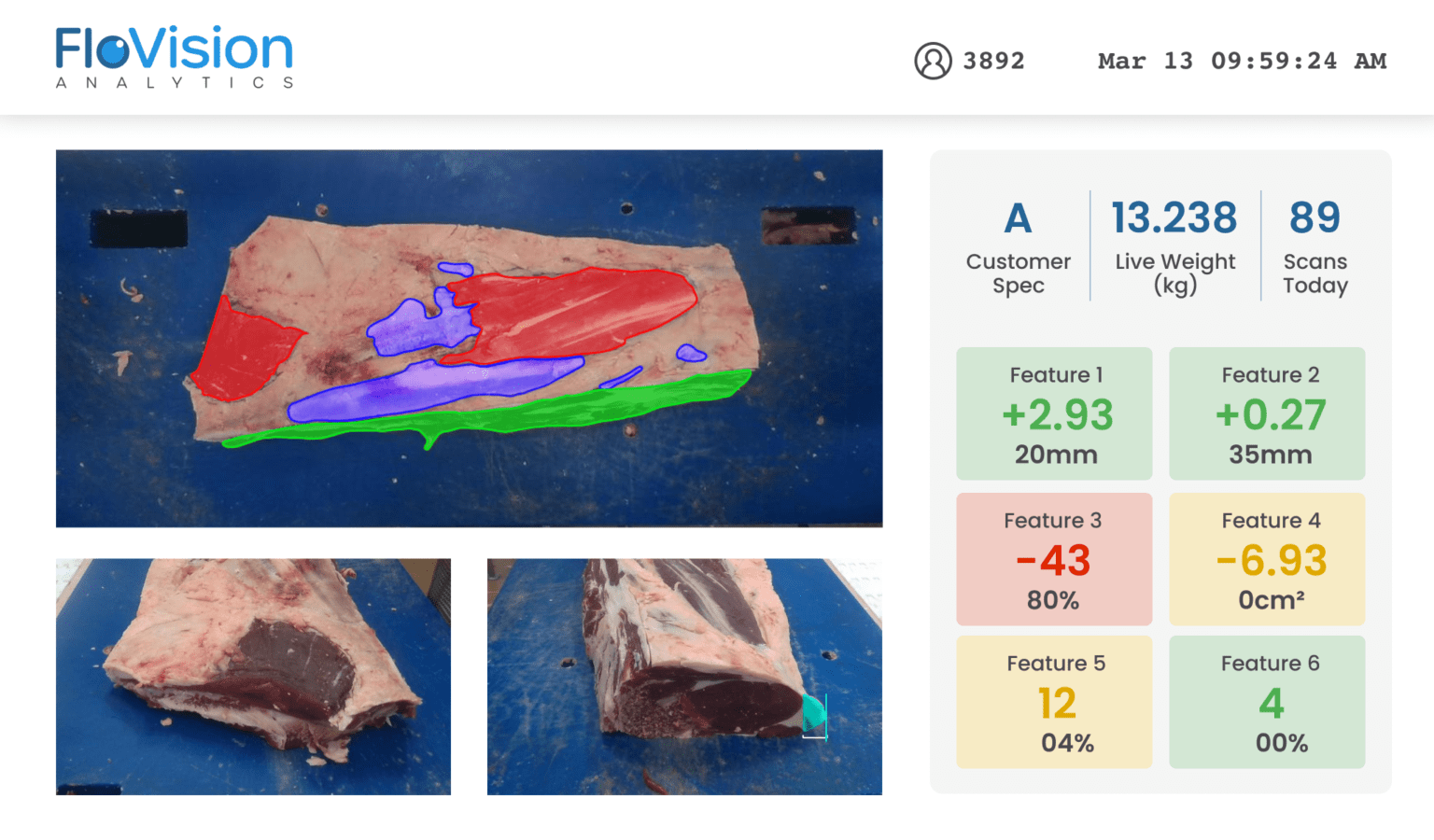
AI systems can examine every item at line speed, identifying defects, foreign objects, and specification deviations without reducing throughput. This transitions quality control from spot-checking to 100% coverage and delivers instant operator feedback for corrective action.
Visual inspection can recognize product color variations, size inconsistencies, product defects, and specification deviations that might otherwise escape notice in high-speed production settings.
2) Foreign Object Detection
AI vision systems are highly effective at spotting foreign bodies in food products, including plastic, metal fragments, bone chips, and other contaminants that present safety risks. These systems can identify objects that conventional metal detectors or X-ray machines may overlook, particularly non-metallic materials.
3) Surface and Texture Analysis
Sophisticated vision systems strengthen quality control in the food industry by evaluating product surfaces to detect issues such as discoloration, bruising, or texture irregularities. This guarantees consistent visual quality across production batches while flagging potential food safety concerns before items leave the facility.
4) Packaging and Labeling Verification
AI vision technology confirms packaging integrity, seal quality, and label precision. Systems can validate that date codes are accurate, allergen information is displayed, and barcodes are readable – preventing expensive recalls and compliance failures.
5) Yield Optimization and Waste Reduction
Visual inspection uncovers opportunities to minimize over-trimming and product waste. By evaluating cut precision and portion uniformity, these systems help maximize yield while upholding quality standards.
6) Compliance Documentation and Audit Readiness
Visual inspection systems automatically record quality checks with timestamped images and data, generating audit-ready records that substantiate FSQA compliance. This digital trail shortens audit preparation time and reinforces verification processes.
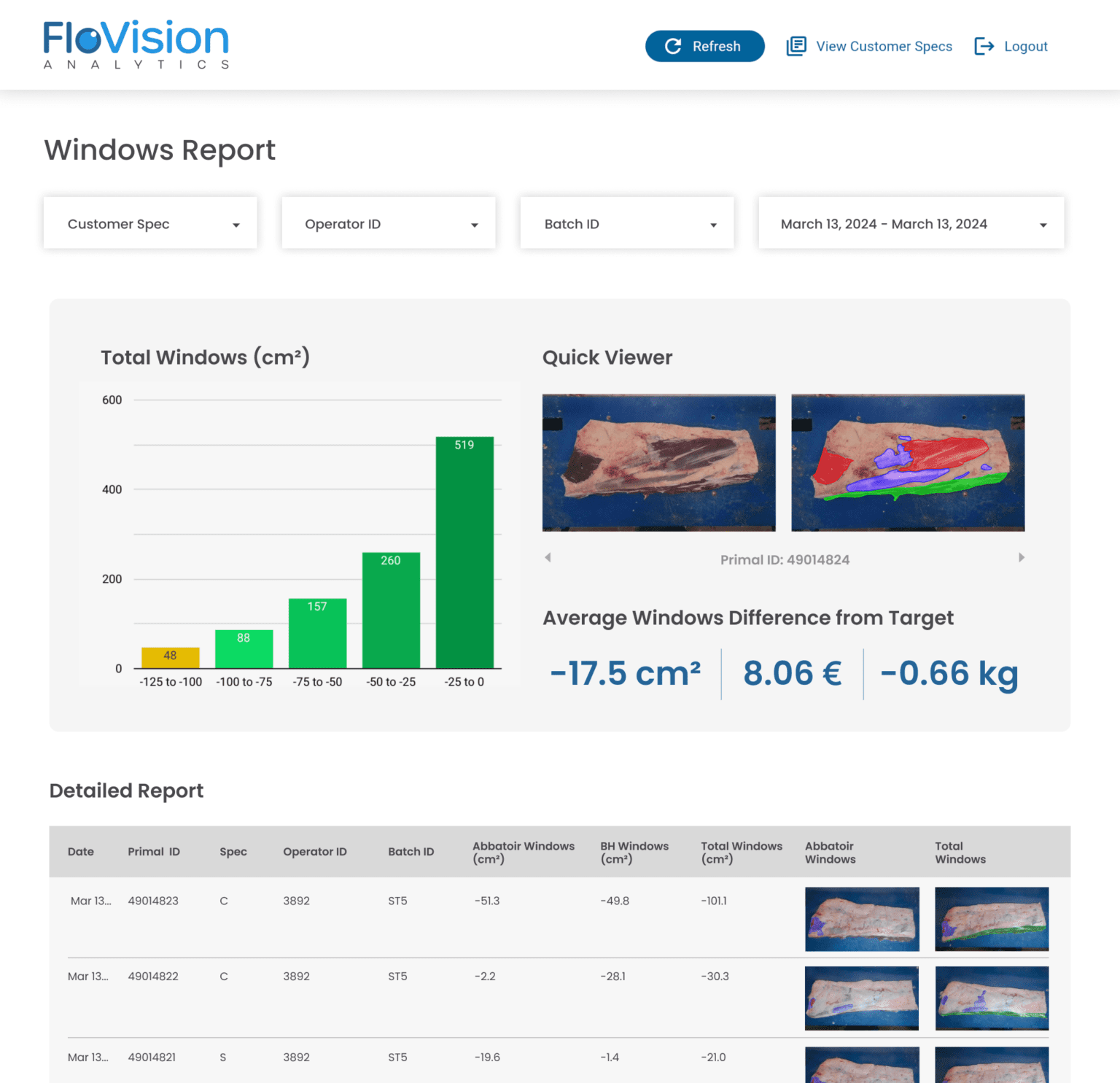
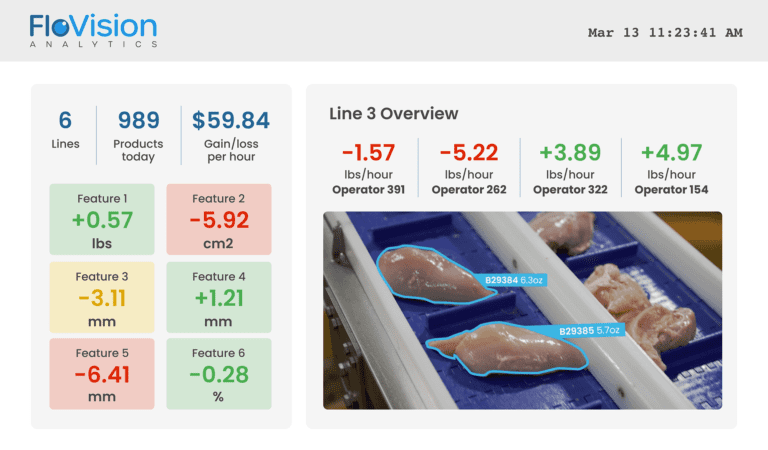
For instance, FloVision Nano is engineered for high-speed production lines and can precisely inspect up to 80 products per minute, guaranteeing complete coverage across all shifts and product batches. FloVision Pro, another AI quality control solution, oversees production stations and delivers real-time quality feedback to operators.
Enabling Technologies: The Foundation Behind It
These technological advancements are transforming quality control in the food industry, delivering greater precision and efficiency.
- High-resolution cameras paired with specialized lighting for accurate food product imaging
- Machine learning algorithms trained on targeted product defects and quality attributes
- Edge compute hardware built to withstand demanding food processing environments
- A centralized data layer that consolidates visual inspection data with production metrics for thorough analysis
A Compelling Case for Immediate Action
High-profile food safety incidents illustrate why rigorous quality control in the food industry is essential, as failures rapidly escalate into public-health emergencies and business crises. Establishing AI-enabled visibility, traceability, and control empowers plants to prevent problems and respond more swiftly when they arise.
From Compliance Obligation to Strategic Advantage
AI reinforces every facet of quality control in the food industry while liberating teams from manual, reactive tasks. With continuous inspection, predictive insights, and automated documentation, plants can:
- Maintain consistent quality control across all shifts
- Streamline audits through built-in traceability
- Boost yield and minimize waste
- Drive innovation without compromising safety
Solutions such as FloVision Pro and FloVision Nano enable you to deploy these enhancements at both station and line levels, converting FSQA from a compliance obligation into a powerful catalyst for performance.
FLOVISION NANO
Compact AI sensor to measure yield and quality at production speed.