
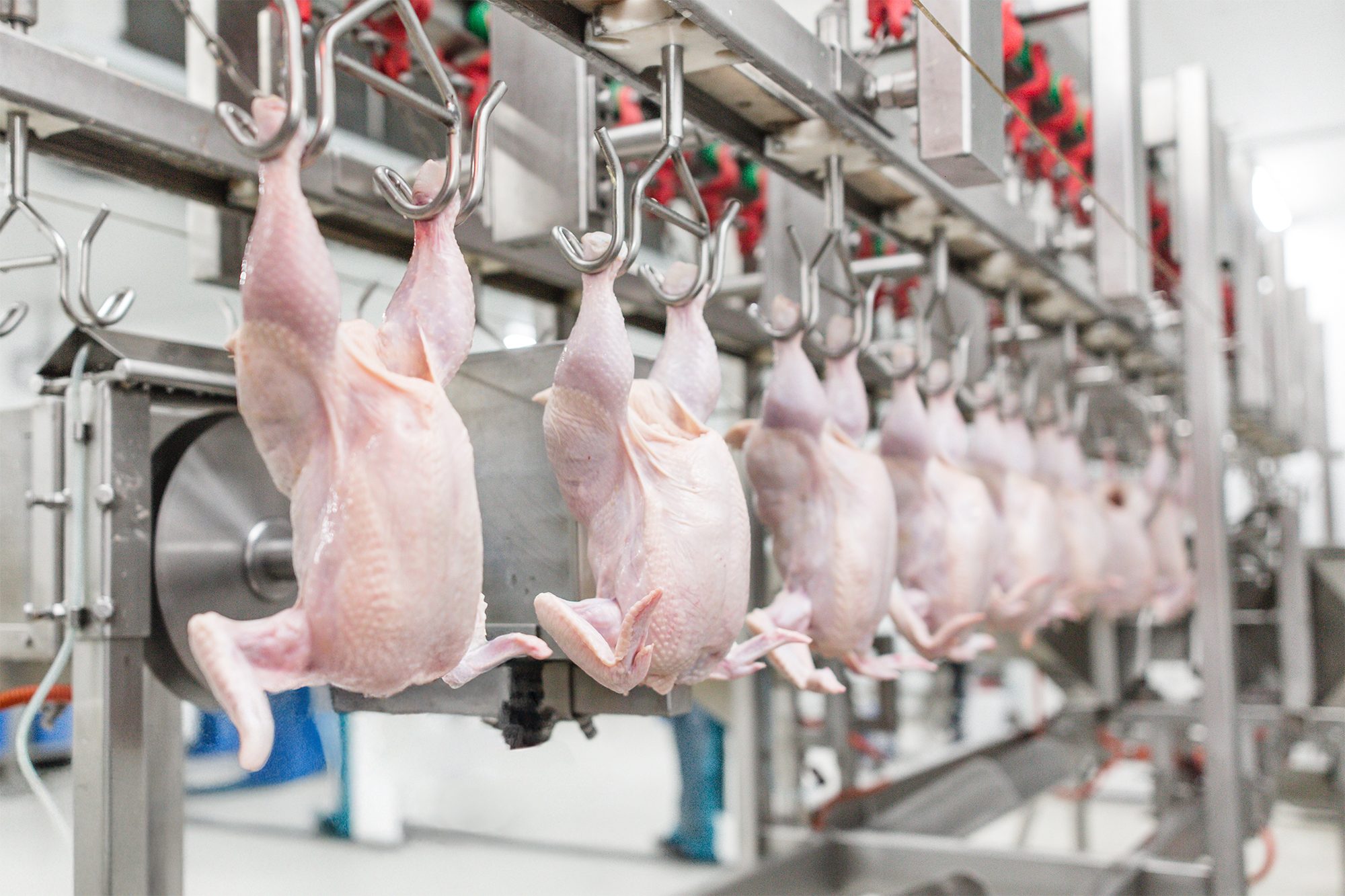
Contemporary poultry processing lines operate at remarkable speeds—reaching 175 birds per minute under USDA regulations. At this rate, verifying that every carcass is free from foreign objects and quality defects poses a core challenge: human inspectors simply cannot scrutinize each bird thoroughly enough to detect every issue.
The repercussions of overlooked defects are substantial. Foreign material contamination prompts expensive recalls, regulatory enforcement actions, and lasting harm to customer relationships. Quality defects result in downgrades, rework, and waste that diminish already-narrow profit margins.
This article explores why conventional manual inspection approaches fall short at elevated line speeds, how automated vision systems address these shortcomings, and what poultry processors should evaluate when deploying detection technology.
Food Safety Challenges at Contemporary Line Speeds
Speed vs. Scrutiny
USDA regulations allow poultry processing lines to run at speeds reaching 175 birds per minute for young chickens. At this pace, each carcass moves past an inspection station in roughly 0.34 seconds.
Within that fraction of a second, inspectors must identify:
- Foreign materials (metal fragments, plastic pieces, wood splinters, etc.)
- Broken bones and fractures
- Bruising and discoloration
- Cuts, tears, and skin imperfections
- Contamination from fecal matter or bile
- Marks caused by equipment damage
The throughput is immense. A single line running at peak speed handles 10,500 birds per hour—84,000 individual carcasses across an eight-hour shift.
This velocity produces a core imbalance: production technology has progressed faster than inspection methodology. Poultry processors must choose between maximizing throughput and maintaining food safety compliance.
The Financial Toll of Undetected Defects
The monetary consequences of foreign material contamination are considerable. According to industry research, a recall involving fewer than 250,000 units can cost a medium-sized food company more than $2 million—even when the incident causes no illnesses or fatalities. For poultry processors, the overall cost reaches well beyond the immediate recall expenses.
USDA’s Food Safety and Inspection Service (FSIS) records thousands of noncompliance entries each quarter. In Q2 of fiscal year 2025 alone, FSIS documented 24,468 noncompliances across all meat and poultry establishments during nearly 2 million verification procedures. Each violation represents a potential food safety hazard and compliance obligation for processors.
Beyond regulatory enforcement, the reputational fallout from foreign material recalls can undermine customer relationships and market standing. In an industry operating on slim margins—typically 2-5% for poultry processors—these disruptions pose a direct threat to profitability.
This velocity produces a core imbalance: production technology has progressed faster than inspection methodology.
Why Manual Inspection Cannot Keep Pace
Physical Constraints
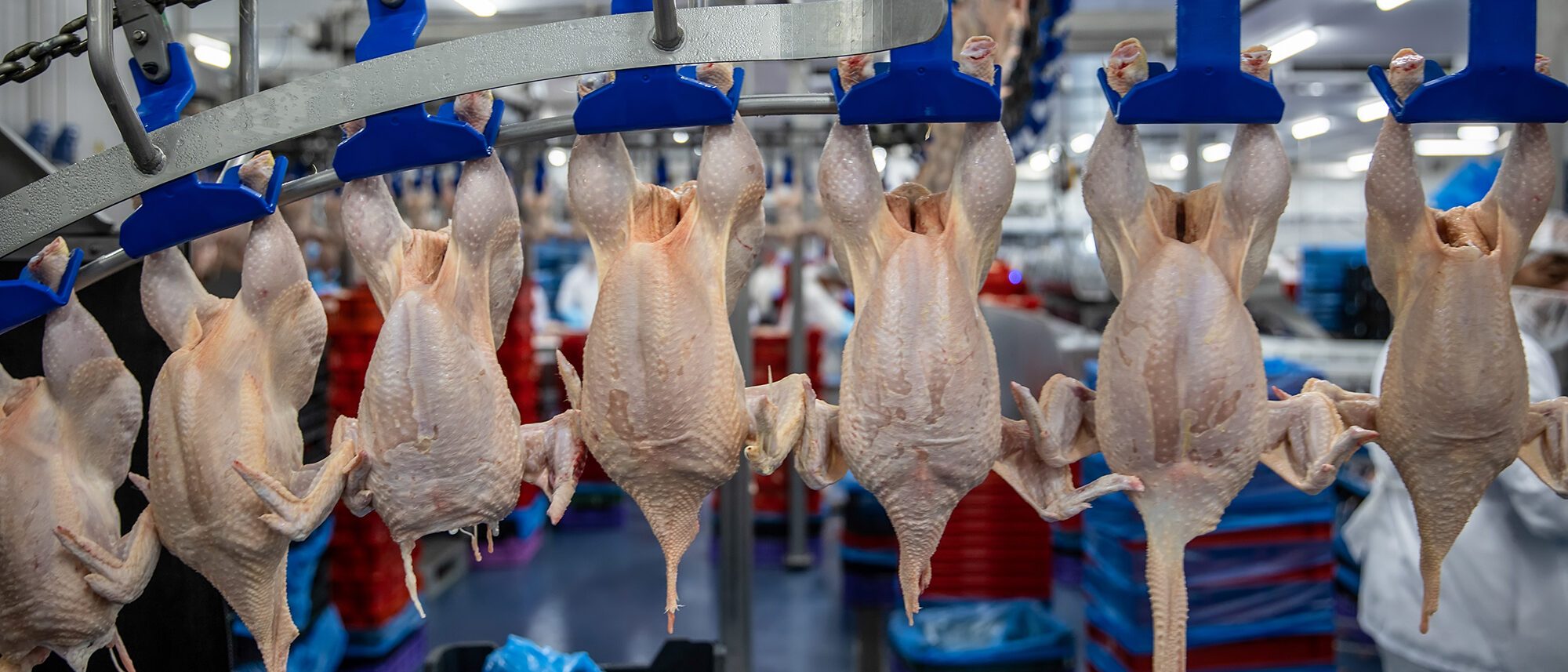
The arithmetic is unrelenting. At 175 birds per minute, an inspector working a 30-minute shift rotation encounters 5,250 carcasses. Conducting a thorough examination of each carcass for multiple defect categories while sustaining focus and precision is unattainable at this volume.
Fatigue amplifies the challenge. Research on visual sustained attention demonstrates that accuracy declines markedly during prolonged periods of continuous visual assessment, especially in repetitive, high-speed inspection tasks. Poultry processing environments—cold, humid, and fast-paced—hasten this deterioration.
Coverage poses an additional obstacle. Inspectors typically observe carcasses from a single vantage point as they move along the line. Rotating each carcass for thorough surface examination would necessitate slowing or halting production, negating the efficiency advantages that high-speed lines deliver.
Human Inconsistency
Subjective judgment differs across inspectors, shifts, and facilities. What one inspector identifies as a defect, another may approve. This variability generates downstream complications: customer complaints regarding quality, disputes about spec compliance, and difficulty tracing root causes of recurring issues.
Training deficiencies worsen the situation. The food manufacturing industry experiences ongoing workforce turnover, requiring continual onboarding of new hires who lack the pattern recognition capabilities that seasoned inspectors cultivate over years.
New employees need weeks or months to reach proficiency in spotting subtle defects—broken bones beneath the surface, early-stage bruising, or small foreign objects against complex backgrounds. Throughout this learning period, defect detection rates remain lower and inconsistency higher.
Compliance Gaps
USDA regulations mandate documentation of inspection findings, yet manual logging is inherently incomplete. Inspectors concentrating on visual assessment cannot simultaneously keep detailed records of every observation, producing gaps in traceability.
When defects do reach customers, poultry processors frequently struggle to determine when and where the problem originated. Was it a specific shift? A particular operator? Equipment requiring maintenance? Without comprehensive data, processors default to broad, costly interventions rather than targeted corrections.
The reactive character of manual inspection—uncovering problems at end-of-line or through customer complaints rather than during processing—leads to elevated rates of rework, downgrade, and waste.
Poultry processors require a system that examines 100% of products, at full line speed, with objective and traceable results.

How Automated Vision Systems Operate at Line Speed
The Technology
Advanced vision systems engineered for poultry processing integrate high-speed cameras, specialized lighting, and machine learning algorithms to evaluate products in real-time without reducing throughput.
The fundamental workflow executes in milliseconds:
1. Image capture: High-resolution cameras photograph each carcass from multiple angles as it travels through the inspection zone. Specialized lighting removes shadows and accentuates potential defects.
2. Analysis: Machine learning models trained on millions of images assess each photograph, recognizing characteristics that signal foreign objects, bone fragments, bruising, contamination, or other quality concerns.
3. Decision: The system evaluates findings against preset thresholds and specifications, rendering accept/reject determinations in real-time.
4. Action: Products that fail inspection trigger automatic diversion to rejection bins or secondary inspection areas. The system records detailed information about each rejection for traceability.
5. Learning: Sophisticated systems continually refine their detection models as they process additional products, enhancing accuracy over time.
Poultry processors require a system that examines 100% of products, at full line speed, with objective and traceable results.
Detection Capabilities
Automated vision systems excel at recognizing issues that pose difficulties for human inspectors:
Foreign materials: Metal detectors have been standard equipment in food processing for decades, yet they overlook non-metallic contaminants—plastic fragments, wood splinters, or rubber pieces. Vision systems identify these objects through color, texture, shape, and reflectivity differences from normal poultry tissue.
Bone fragments: Broken bones beneath the skin surface are virtually impossible for inspectors to observe at line speed. Vision systems employ multi-spectral imaging to detect density variations signaling bone material, even when concealed by tissue.
Quality defects: Subtle bruising, early-stage discoloration, and minor skin tears are challenging for fatigued inspectors to notice consistently. Vision algorithms apply objective criteria on every occasion, removing the subjective variability that undermines manual inspection.
Contamination: Fecal matter, bile, or ingesta contamination must be identified and eliminated before packaging. Vision systems detect these contaminants irrespective of line speed, shift, or inspector fatigue.
Performance at Scale
Top-tier automated vision systems attain detection rates of 99%+ for foreign materials and visible defects when properly calibrated and maintained. Crucially, they sustain this performance across 100% of products, 24 hours per day, at full line speed.
The systems produce comprehensive data on every inspection—timestamps, defect types, images of rejected products, and trend analysis that uncovers patterns invisible to manual inspection. This data empowers poultry processors to trace root causes (specific equipment, operators, or processes generating defects) and deploy targeted corrective actions.
Deploying Automated Inspection in Your Poultry Facility
Assessment and Planning
Effective implementation starts with a clear understanding of your particular requirements:
- Line configuration: Where does your current inspection take place? What limitations exist regarding available space, mounting points, and integration with existing equipment?
- Detection priorities: Which defect types generate the most customer complaints, downgrades, or regulatory concerns?
- Volume and speed: What are your standard and peak production rates? How does seasonal variation influence throughput?
- Integration requirements: How will the vision system interface with your existing data systems, plant floor controls, and quality management processes?
Collaborate with technology providers who possess demonstrated experience in poultry processing. The environment presents unique difficulties—moisture, temperature fluctuation, organic materials, and washdown requirements necessitate specialized equipment design.
Installation and Calibration
Correct installation is essential. Vision systems demand:
- Stable mounting that shields cameras from line vibration
- Consistent lighting that removes shadows and glare
- Unobstructed views of the product from all required angles
- Minimal interference from steam, condensation, or cleaning chemical residue
Initial calibration entails training the system’s machine learning models on your specific products, packaging, and quality standards. This process typically requires several days of operation during which the system learns to differentiate normal variation from genuine defects.
Anticipate a learning curve. Operators need instruction on system monitoring, adjustment of detection thresholds, and alarm response. Maintenance teams must understand cleaning procedures that safeguard sensitive equipment while satisfying sanitation requirements.
ROI Snapshot
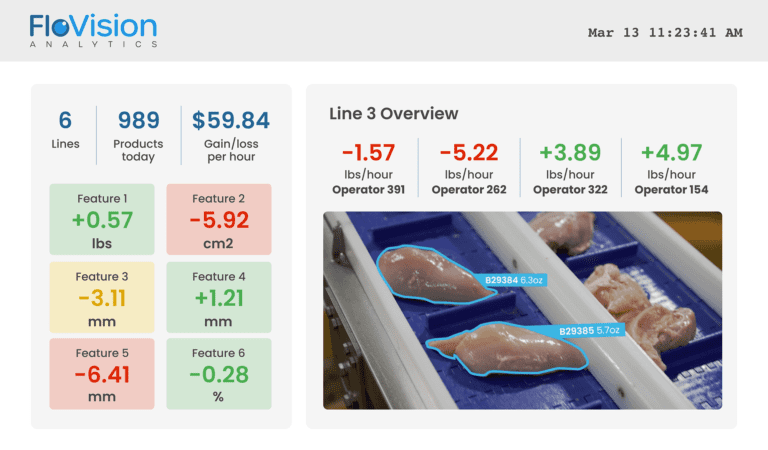
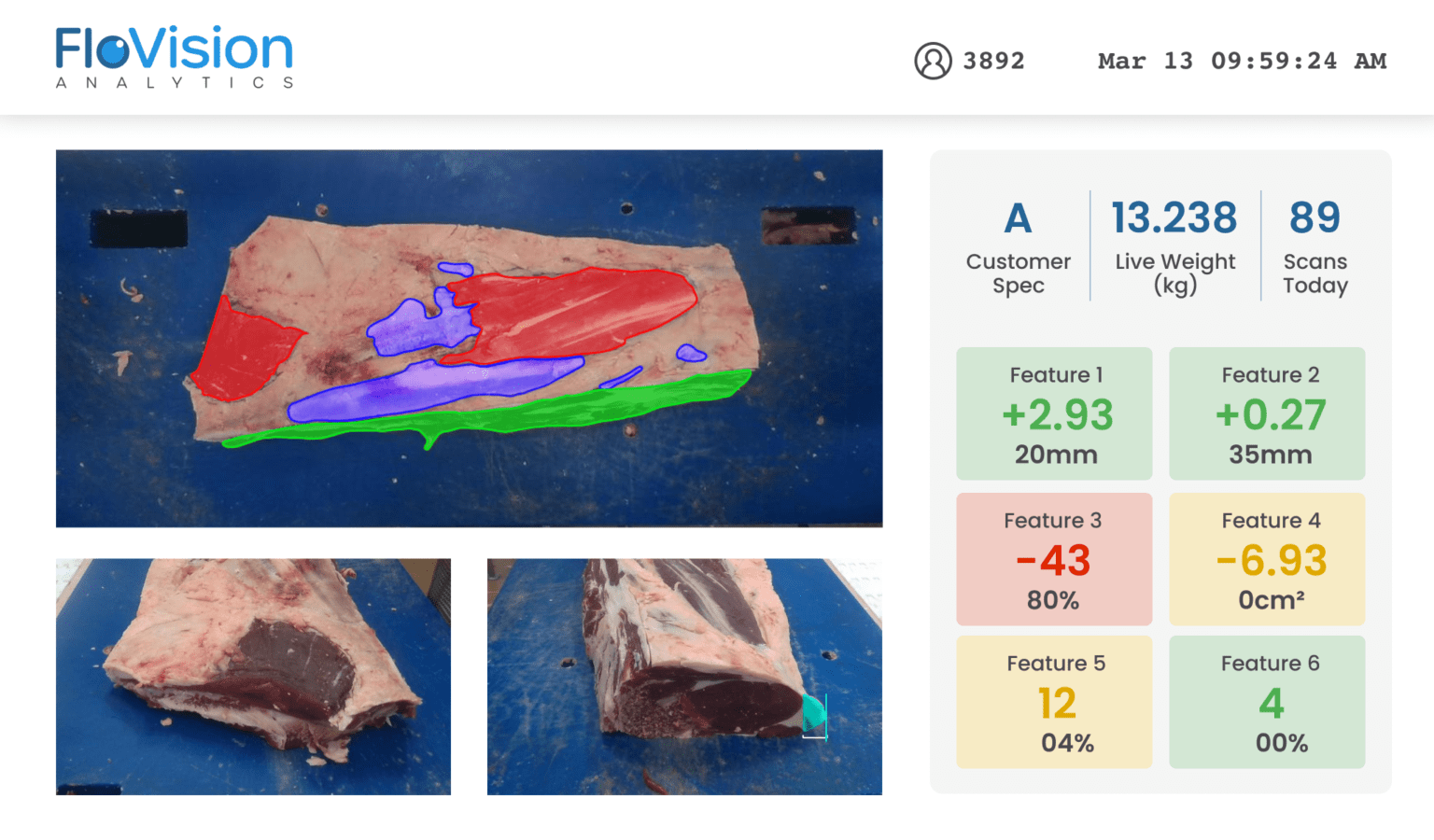
For high-volume poultry operations processing millions of birds annually, automated vision systems such as FloVision Nano produce measurable returns. The compact sensors attach directly to existing conveyors and scan 100% of products at line speed, identifying foreign objects, defects, and quality deviations that manual inspection overlooks.
The payback period for poultry facilities typically ranges from 3-6 months. The cost savings from preventing a single foreign material recall—which can surpass $2 million even for minor incidents—can offset the system investment several times over.
Beyond direct financial returns, automated inspection delivers operational advantages that manual methods cannot match: uniform quality standards across all shifts, comprehensive traceability for swift recall response, and data-driven insights that pinpoint the root causes of recurring defects before they affect customers.
Conclusion
The velocities demanded by contemporary poultry processing surpass the capabilities of manual inspection. Automated vision systems offer the only practical path to 100% inspection at line speed, uniting superior detection performance with the objective consistency and comprehensive data that today’s quality and food safety programs demand.
FLOVISION NANO
Compact AI sensor for measuring yield and quality at production speed.
FLOVISION PRO
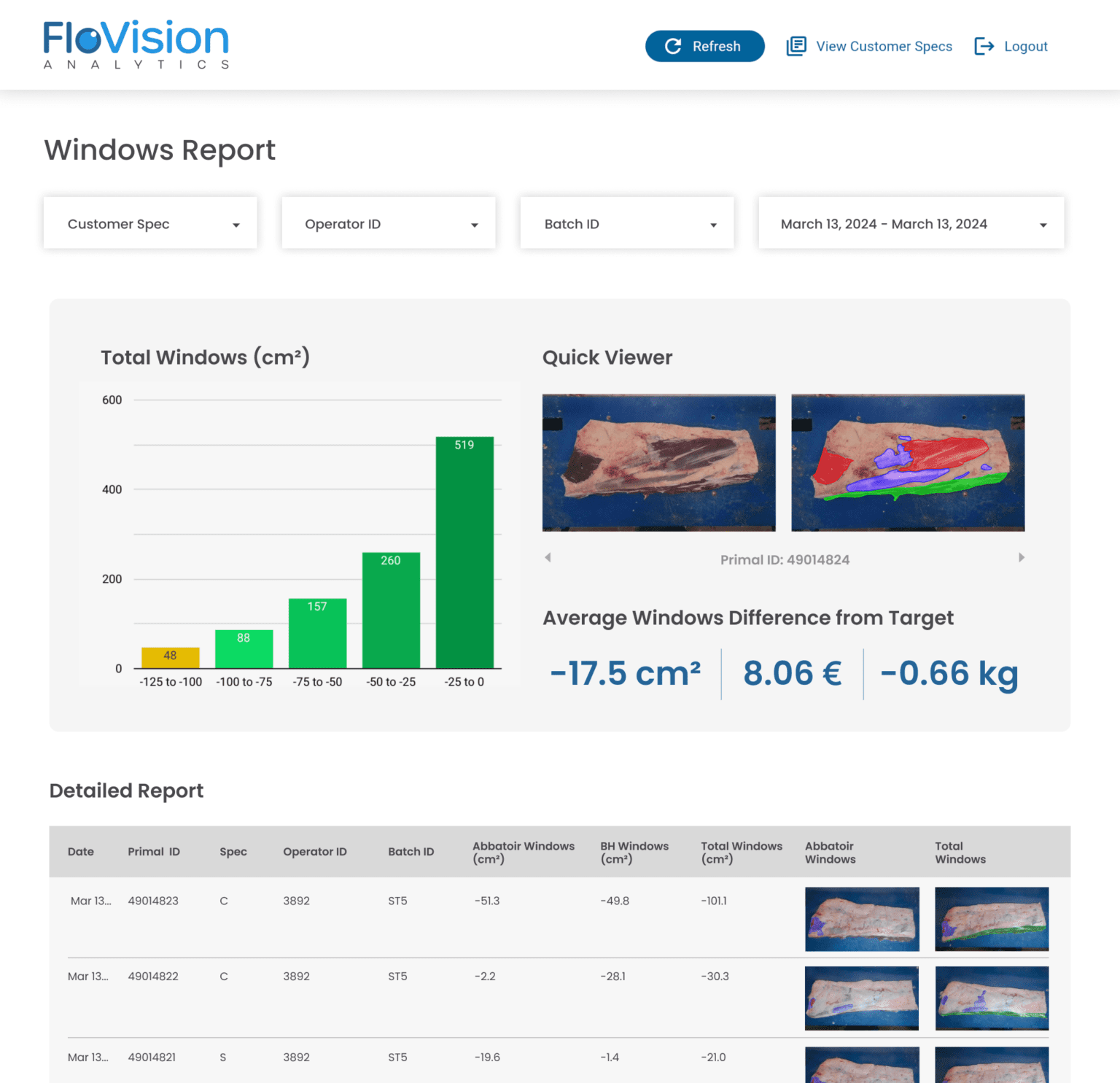
Modular AI station for enhancing yield, quality, and staff capabilities.