What Causes Yield Loss in Pork Processing? A Detailed Examination
Butchering Inaccuracies Under the fast-paced demands of the processing line, butchers frequently trim away too much meat, resulting in lost high-value yield. This excess removal decreases the volume of pork product, directly eroding potential revenue. Conversely, insufficient trimming of certain features can also produce lower quality meats that do not meet customer specifications. These products often command a lower price or may be rejected entirely by customers, causing additional financial losses. Striking the right balance in trimming is essential, as it impacts both the quality and quantity of pork. Beyond satisfying customer specifications, there are further processes in pork production that influence yield. For example, butchers might remove excess meat that does not harm product quality but could contribute to a greater overall weight. However, without precise cutting techniques and a comprehensive understanding of the different grades and specifications required by various customers, valuable portions of the pork that could enhance product weight and value are often discarded unnecessarily. The capacity to optimize each specification for maximum yield without sacrificing quality is a vital tool for substantially reducing waste and raising profit margins in pork processing operations from 1-3% to 3-5%.
The capacity to optimize each specification for maximum yield without sacrificing quality is a vital tool for substantially reducing waste and raising profit margins in pork processing operations from 1-3% to 3-5%.
Undetected Errors In pork processing facilities, undetected production errors represent a major obstacle to sustaining high yield and ensuring product quality. Butchers perform most of their work without immediate performance feedback, meaning they are generally not notified of incorrect trimming or opportunities for yield optimization. This lack of prompt feedback allows errors and inefficiencies to accumulate over time, as butchers inadvertently repeat them. Compounding this challenge is the limited number of floor and station managers available to supervise pork production. These managers are essential for identifying and correcting errors in real-time, yet they are frequently responsible for overseeing multiple stations or lines at once. This divided attention can make it challenging for them to observe and address every mistake as it occurs. Consequently, many unresolved errors intensify over time, resulting in substantial yield losses and diminishing the profitability of the entire operation.
Improperly Sorted Products
Inaccurate sorting of pork products results in considerable yield loss, especially when sorting is not optimized to satisfy the specifications demanded by customers. Butchers and processors who do not align their products with these precise customer specifications often produce batches of meat that are less valuable or unsuitable for the intended buyer. This misalignment can compel processors to sell these products at a discount. Optimizing product sorting is essential, as it ensures that each piece of meat is processed and categorized to maximize its market value and align with customer expectations, thereby reducing waste and strengthening profitability.
Lack of Traceability
Without systems to monitor the origin and quality of incoming pork, processors cannot determine which producers consistently supply livestock with the highest yield. This results in continued dependence on suppliers whose products generate lower yields, amplifying the yield loss from butchering and inaccurate sorting. Robust traceability enables processors to optimize their supply chains, selecting sources that enhance overall yield, quality, and profitability.
Established Methods to Boost Yield in Pork Production
Individualized Butcher Training
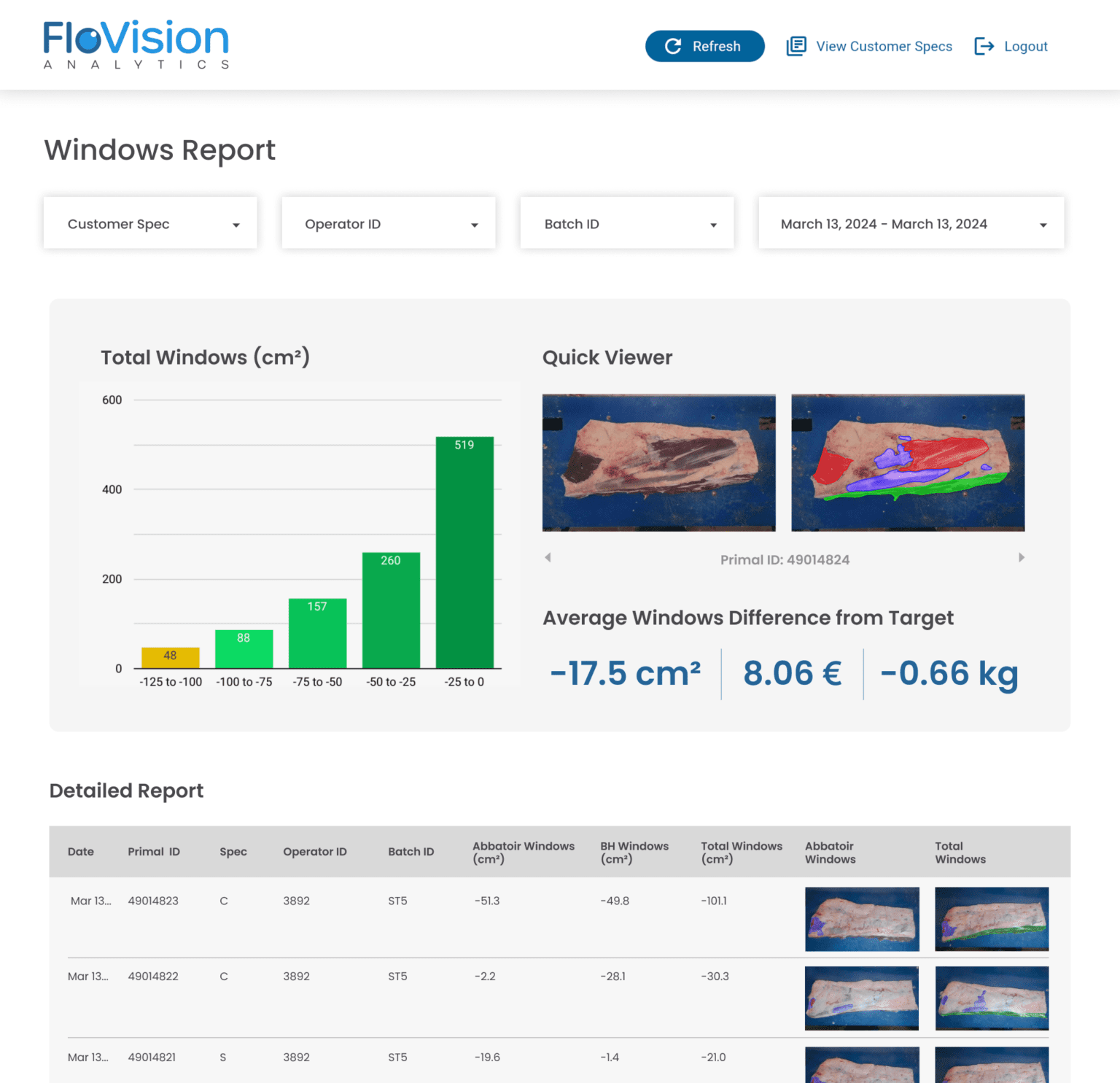
To effectively tackle yield loss, pork processors can enhance the skills of their butchers through individualized training programs. Training should be customized based on specific performance metrics and common errors identified during the butchering process. By evaluating each butcher’s technique and results, training can be adapted to address particular weaknesses and elevate production efficiency. FloVision AI supports this process by tracking individual butcher performance over time, providing managers with trend analysis that assists in creating personalized training strategies for each butcher.
Real-Time Performance Feedback
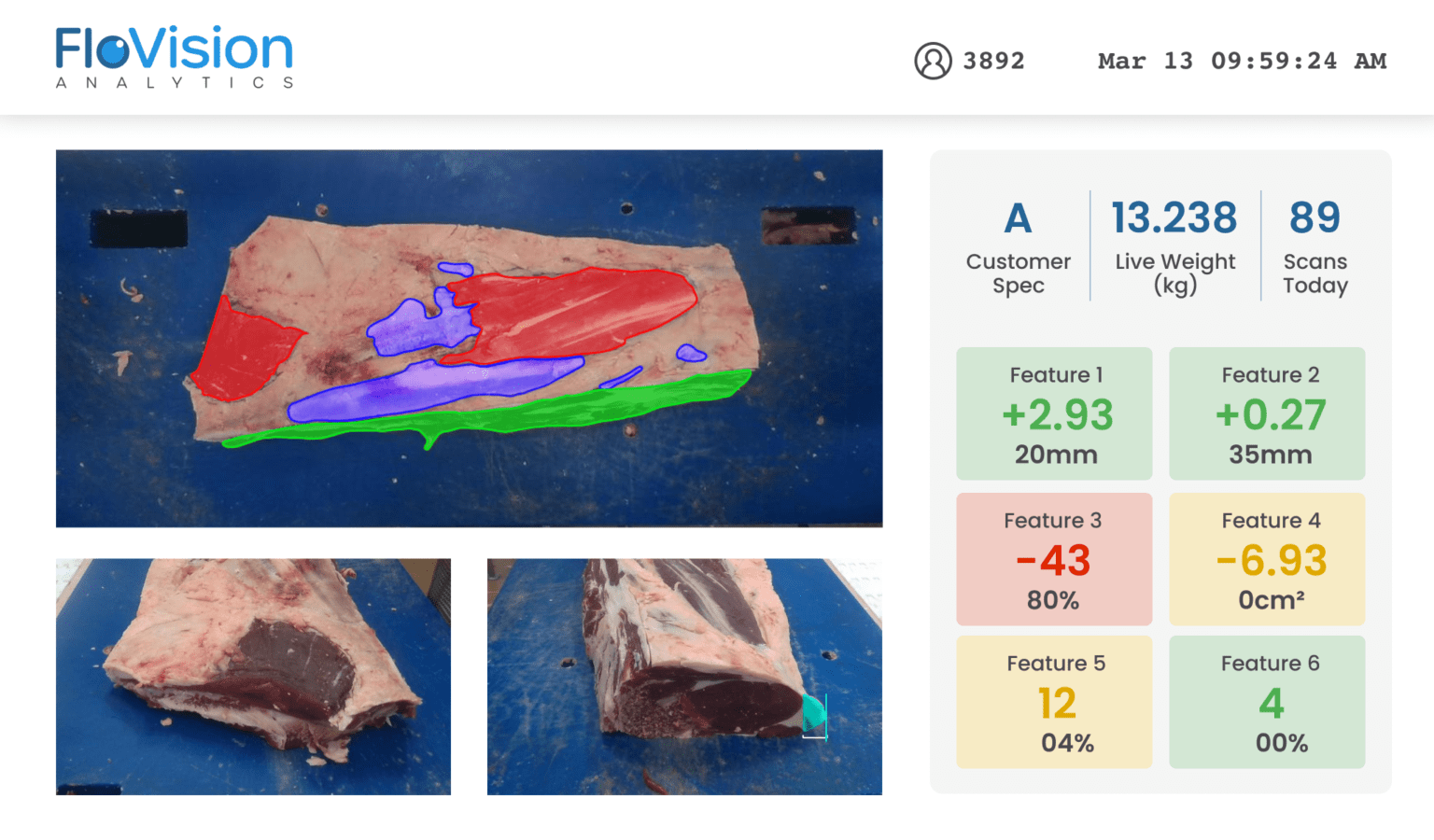
Deploying technology that measures specific pork features and weight at the point of butchering can greatly improve the immediate feedback provided to butchers. These systems allow butchers to receive instant performance feedback, enabling them to refine their techniques in real-time. FloVision Pro, for example, employs lasers to guide butchers during the trimming process and presents real-time feedback on station screens. This system directs butchers to eliminate over and under-trimming and identifies areas where yield optimization can be achieved, ensuring that each cut maximizes value and satisfies quality standards.
FloVision Pro directs butchers to eliminate over and under-trimming and identifies areas where yield optimization can be achieved, ensuring that each cut maximizes value and satisfies quality standards.
Automated Product Sorting
Employing automated sorting systems can transform how pork products are categorized during processing. These systems scan each product and automatically sort them by grade, dimension, or other quality metric, assigning them to the optimal customer specification. FloVision Nano enhances this process by delivering automated sorting and grading insights for each piece as it travels along the conveyor. This technology ensures that every piece of pork is allocated to maximize yield and minimize human error.
Traceability
Traceability systems are essential for pork processors to maintain oversight across production facilities. Through tagging or advanced fingerprinting technology, processors can monitor each piece from slaughter through every stage of processing. This capability enables identification of the suppliers, batches, and butchers that contribute to the highest quality end products. FloVision AI equips processors with fingerprinting technology that follows products throughout the production process without any physical tagging and delivers supplier, batch, and butcher trend data.
Turning Pork Yield Loss into Profit
Yield loss in pork processing is a multifaceted issue with sources spanning the entire production chain that directly impacts the profitability of pork processors. FloVision AI delivers technology that targets the common causes of yield loss, including performance measurement, production trend analysis, and product traceability. By partnering with FloVision, pork processors can address these challenges and elevate their operational efficiency and profitability.
For more details on how FloVision AI can help you maximize yield and reduce waste at every stage of pork production, get in touch.
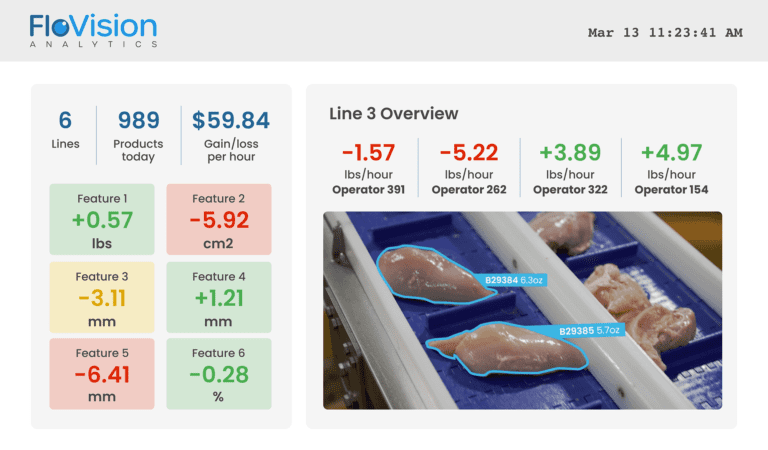
FLOVISION NANO
Compact AI sensor to measure yield and quality at production speed.